
The 4 Ways to Fail on Your Wig Buying Journey
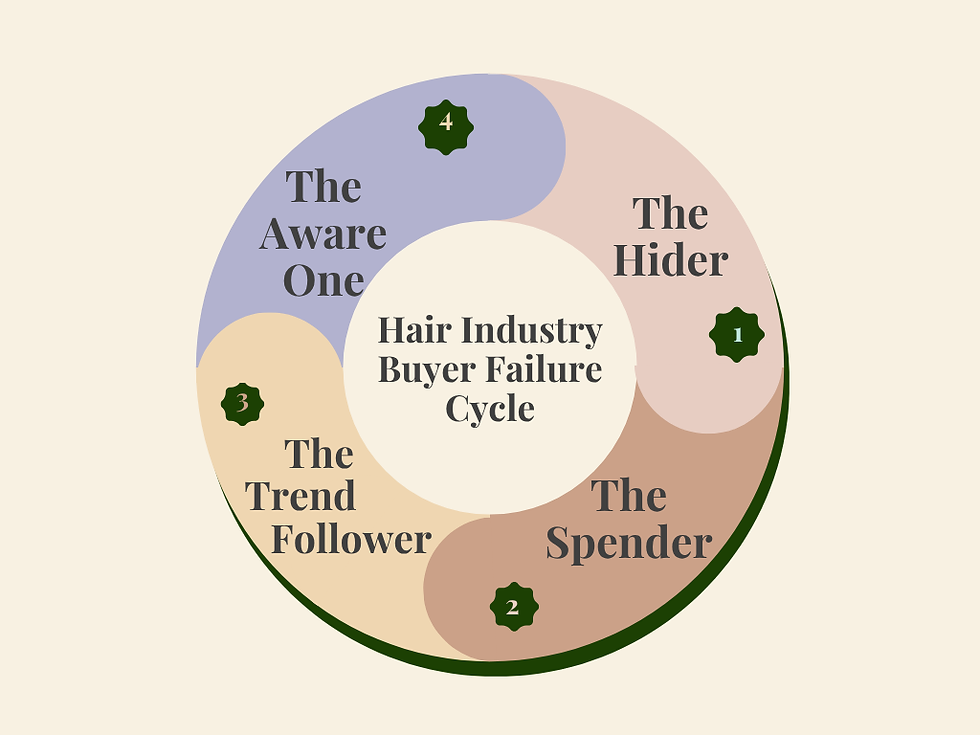
Every woman who steps into the beauty industry is chasing the same thing: confidence that lasts.
But the problem isn’t technique — it’s mindset.
The industry keeps teaching women how to look fixed, not how to feel free.
"Each failed mindset comes from one emotional trigger: the desire to look whole without doing the work to be aligned. --That’s the psychology the industry preys on — fast results, fast installs, fast money."
From clients to stylists, 4 major thought processes drive how we approach buying hair.
Four fail every time.
1. The Hider: “If I cover it, I can ignore it.”

This woman is tired.
The process feels overwhelming, so she hides under wigs, braids, scarves, or avoidance.
She isn’t lazy; she’s just discouraged.
She’s been told beauty should be easy, but no one taught her why it keeps going wrong.
Why it fails:
Avoidance never creates alignment. You can’t fix what you refuse to understand.
2. The Spender: “Expensive hair will solve it.”

She believes quality comes from cost.
The lace is great, the bundles are premium, and the results still don’t feel right. Her wig still looks "wiggy," and you can tell it's a wig in every picture.
Because money can buy good hair — but it can’t buy harmony.
Why it fails:
Without true hairline science, even the most expensive wig will look cheap or disconnected from the face.
Think of a celebrity who is successful, has plenty of money, but always has a bad wig.
"Good hair" with a bulky hairline does not end with good results.
3. The Trend Follower: “If it looks good online, it must be right.”

She copies what she sees — influencer installs, quick melts, and temporary glam.
Her results photograph beautifully, but break down by the weekend.
The focus is on the filter, not the foundation.
Why it fails:
Skill without understanding is temporary. This is how many stylists and wig influencers drive their sales: cheap hair may look good for a moment, but it will not last. They expect you to keep coming back.
The look lasts for a moment; the knowledge lasts forever.
4. The Aware One: “I know there’s a problem, but I don’t know how to fix it.”

This is the stylist or client who can see the imbalances of lace that's too light, density too heavy, and excessive bulkiness, but can’t translate what’s wrong into a viable solution.
She’s searching for language, system, and structure.
Why it fails:
"Awareness without direction turns into frustration."
It’s knowing you’re close to the truth but stuck outside the formula.
The Point Where it Starts to Work
The common factor in all wigs is the HAIRLINE. It's the first thing people see. Regardless of the type of wig, it is essential to ensure that your hairline blends seamlessly with your extensions.
As a beauty architect, I have taken time to study the hairline and its relationship to your scalp, features, and overall hair science to produce a formula that lasts BEYOND the salon chair. Learn more in our next blog: "The history of hairlines and how we got here"
Most people chase the next Lace.
I teach the next level.
Because once you understand balance, you stop fighting with your reflection — and start focusing on your life.
Want to learn more about the true science of an everyday natural wig? Join our upcoming course in November 2025.nd


Comments